Why we chant

Hare Krishna?

Life's full. Something still feels missing. Chanting in the street sounds like an odd answer, but here we are.
Strangers keep stopping and we keep showing up. Make of that what you will.

The Maha-mantra

These words are for everyone — no belief required. Just chant, and notice what shifts.

Hare Krishna Hare Krishna
Krishna Krishna Hare Hare
Hare Rama Hare Rama
Rama Rama Hare Hare

var btn = document.getElementById('hn-top-btn'); var visible = { c05: false, c08: false, c02: false }; function update() { btn.classList.toggle('hn-top-visible', !visible.c05 && !visible.c08 && !visible.c02); } var observer = new IntersectionObserver(function(entries) { entries.forEach(function(e) { if (e.target.id === 'container05') visible.c05 = e.isIntersecting; if (e.target.id === 'container08') visible.c08 = e.isIntersecting; if (e.target.id === 'container02') visible.c02 = e.isIntersecting; }); update(); }, { threshold: 0 }); ['container05', 'container08', 'container02'].forEach(function(id) { var el = document.getElementById(id); if (el) observer.observe(el); });

Harinama Sankirtana

Street chanting — what's it all about?

Street chanting, known as Harinama, is kirtan without walls — the ancient practice of taking the mantra into the streets, filling public spaces with music, movement, and genuine joy.

The street changes key

You hear it before you see it. People slow down on their way home, and some can't help but join in. It's hard to walk past and not feel a little lighter.

Strangers, singing

When did you last sing out loud with strangers? Humans did it for a hundred thousand years. Now we do it alone, in cars.

The mind goes quiet

And something quieter happens underneath all of it. The mind stops racing for a while, and you notice a kind of happiness that wasn't waiting on anything to arrive.

An ancient practice

Where does it all come from?

Long before us, people were doing exactly this. The same words, the same joy, carried across thousands of years.

5,000 years ago

Krishna spoke the Bhagavad Gita to His friend Arjuna on the battlefield of Kurukshetra

500 years ago

Sri Caitanya Mahaprabhu brought the Hare Krishna mantra to the streets across India

60 years ago

Srila Prabhupada brought the mantra to the West, and from New York it spread to every corner of the world

Word by word

What the words mean

Hare, Krishna, Rama. Not really three definitions, but three names in one prayer. The heart reaching out for the Supreme Person, and the joy and love found there.

Hare
The divine energy

The tenderness we've forgotten how to ask for. The loving energy of the Supreme Person that awakens devotion in the heart and draws us back into connection.

Krishna
The all-attractive one

Nothing holds our attention for long anymore. A name for the one of infinite beauty and charm who draws every heart toward Him.

Rama
Source of all joy

The joy we keep searching for in upgrades and holidays. A name for the Supreme Person as the source of a joy that's complete.

One mantra. Hundreds of voices

On the streets of Australia

Most people don't plan to stop. They just do, and some don't want to leave.

Find your city

Chanting near you, every week

Perth
WA
Every Friday at 6:00 pm
Corner of James & William St, Northbridge (near Govinda's)
Gold Coast
QLD
Every Friday from 6:30 pm
3070 Surfers Paradise Blvd, Surfers Paradise
Brisbane
QLD
Every Friday at 5:30 pm
King George Square (Adelaide St end), Brisbane CBD
Melbourne
VIC
Every Tue & Fri at 6:00 pm
Crossways Restaurant, Swanston St, Melbourne CBD
Sydney
NSW
Every Friday at 6:30 pm
Opposite Town Hall, Sydney CBD

Schedules and details are shared in good faith, but times can change. Please confirm with each local group before heading out.

A path worth exploring

The man who turned strangers into a global family

In 1965, at sixty-nine, Srila Prabhupada arrived in New York with a trunk of books and a timeless wisdom to share.

That wisdom was simple. The chanting of the Holy Names, a practice called bhakti-yoga, and a vision of a world where people see each other not as strangers, but as family.

That vision became a global community. Millions, from every background and culture, have found friendship, purpose, and a happiness that lasts.
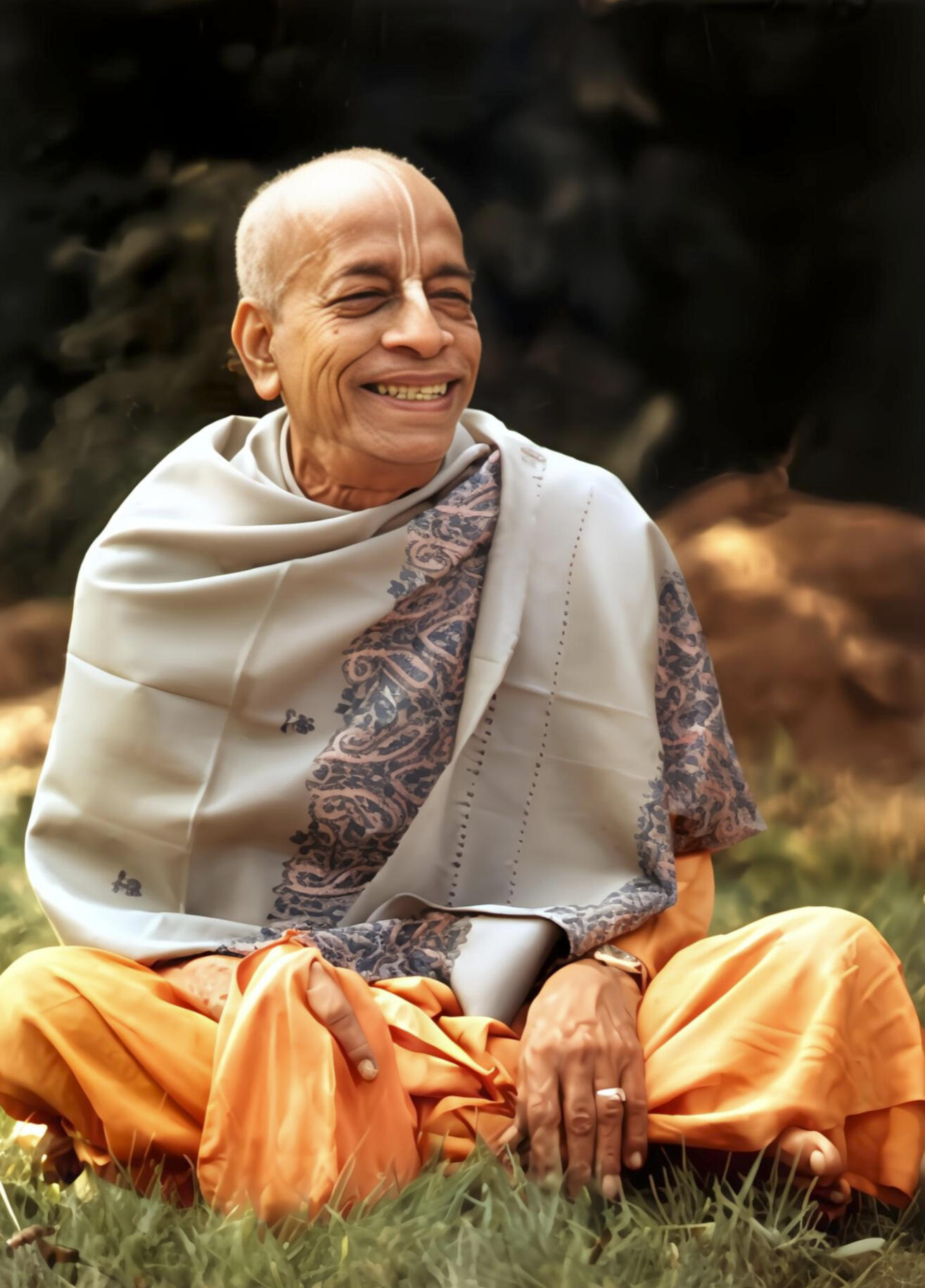
"This Krishna consciousness movement offers a spiritual community that can bring about a peaceful condition in the world."

His Divine Grace A.C. Bhaktivedanta Swami Prabhupada

Bhakti Yoga philosophy

Books by Srila Prabhupada

Prabhupada spent his life translating the great Vedic texts into plain English, so their wisdom could reach anyone. His books have since been translated into 87 languages, with over 500 million copies distributed around the world.
Perfect Questions, Perfect Answers

"We were so foolish that we were always thinking, 'In the future I'll be happy…"
Śyamasundara: We were so foolish that we were always thinking, "In the future I'll be happy."

Śrila Prabhupada: Yes, that is maya, illusion. That is like the ass. You sit down on the back of the ass and hold a morsel of grass in front of its face. The ass is thinking, "Let me go forward a little, and I shall get the grass." [Bob laughs.] But it is always one foot distant. That is ass-ism. [They all laugh.] Everyone is thinking, "Let me go a little forward, and I'll get it. I'll be very happy."

Chant and Be Happy
Chant and Be Happy

With all our knowledge and technology, are modern people really any happier than their predecessors?
Each day doctors and scientists discover more about how the human mind and body work. Yet with this abundance of scientific knowledge and space age technology, which vastly outstrips that of previous generations, are modern people really any happier than their predecessors?

The basic problem in our search for happiness is that our sources of pleasure are all limited. What many people consider our most basic and fundamental pleasures, eating and sex, can only occupy a few moments of each day. Our bodies constantly thwart our plans for enjoyment. After all, you can only eat so much before becoming ill. Even sex has its limits.

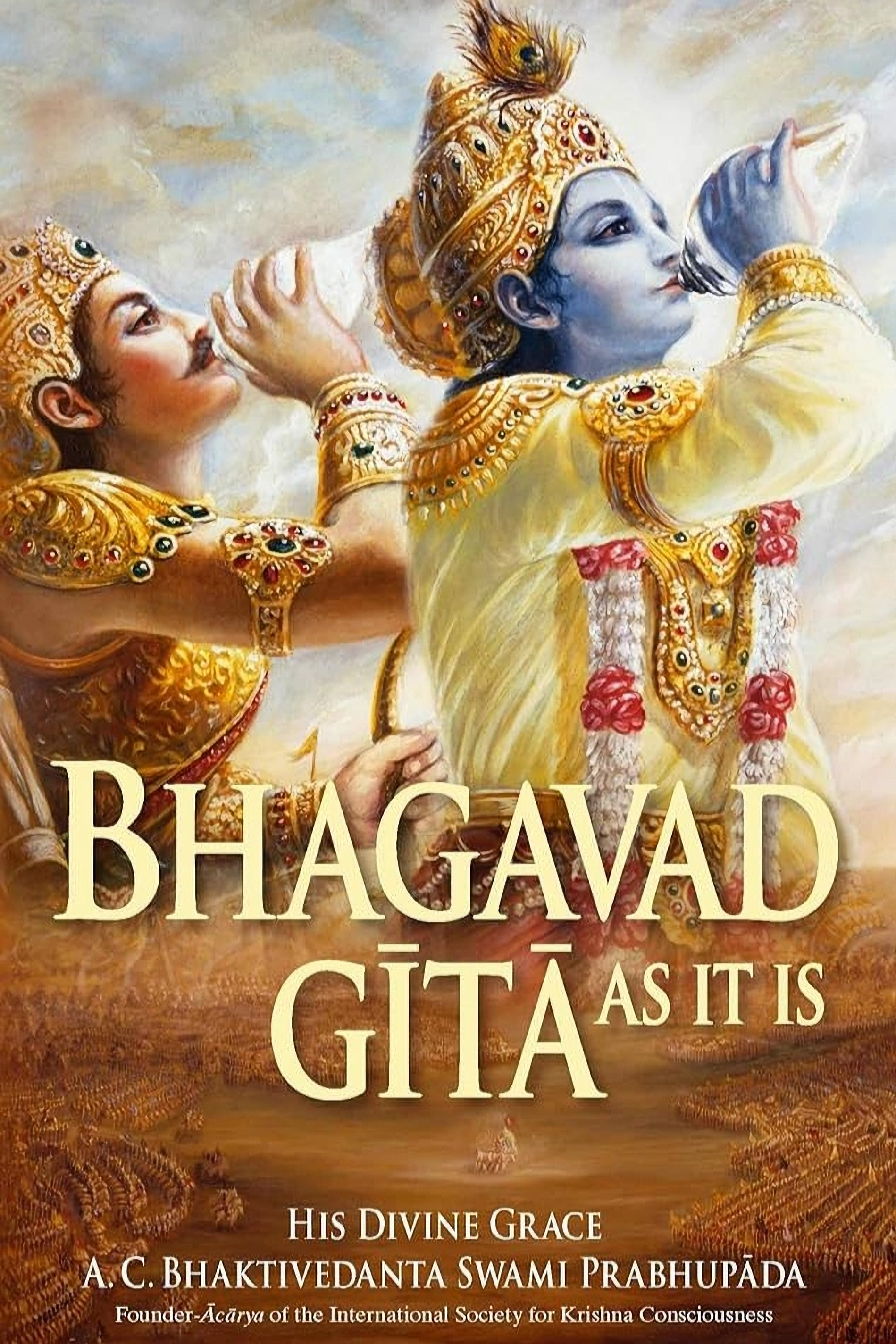
Bhagavad Gita As It Is

"For him who has conquered the mind, the mind is the best of friends; but for one who has failed to do so, his mind will remain the greatest enemy."

Sanskrit

bandhur ātmātmanas tasya
yenātmaivātmanā jitaḥ
anātmanas tu śatrutve
vartetātmaiva śatru-vat

Purport

The purpose of practicing eightfold yoga is to control the mind in order to make it a friend in discharging the human mission. Unless the mind is controlled, the practice of yoga (for show) is simply a waste of time. One who cannot control his mind lives always with the greatest enemy, and thus his life and its mission are spoiled.

document.querySelectorAll('.hn-toggle').forEach(function(btn) { btn.addEventListener('click', function() { var target = document.getElementById(btn.getAttribute('data-target')); var isOpen = target.classList.contains('open'); target.classList.toggle('open'); btn.classList.toggle('open'); btn.childNodes[0].textContent = isOpen ? 'Read more ' : 'Read less '; }); });

Explore Vedic wisdom

Find Prabhupada's books

Read online — free

All of Prabhupada's books, free to read online at Vedabase.io

vedabase.io →
Local community centre

Find books at a Hare Krishna centre or restaurant near you, or just get in touch, and we'll help you find them

[email protected]
Order paper books

Physical copies delivered to your door via Amazon Australia

amazon.com.au →
Ebook or audiobook

Download ebooks for reading or listening on the go from BBT Media

bbtmedia.com →

Curious?

Common questions answered

Yes. You don't need to be religious or believe anything in advance, and you don't need to change a thing about your life. The chanting works the same whether you've practised for years or you're chanting for the very first time.

In fact, that's the beauty of it. You don't have to understand the mantra for it to reach you. Just join in, or simply listen. Come as you are, and let your own experience be the judge.

If you'd call yourself an atheist, you're in good company. Judge it the way you'd judge exercise: by what it does, not what it claims.

Less than you might fear, and more than you'd expect. A small group gathers in a public place with a few simple instruments, and we chant the mantra together, often calling and responding, sometimes dancing. That's really it.

There's no sign-up, no cost, and no pressure to do anything. Passersby stop, listen, sometimes join for a verse or two, then carry on with their day. You're welcome to sing at the top of your lungs or just stand at the edge and take it in. However you join, you're welcome.

When most people hear "yoga," they think of postures and breathing. But yoga really means connection — and bhakti-yoga is the yoga of the heart. The word comes from the Sanskrit bhaj, "loving service," and that's exactly what it is. A way of drawing close to the Supreme Person through love.

The Bhagavad-gita describes several paths. There's karma-yoga, the path of selfless action, jnana-yoga, the path of study and understanding, and ashtanga-yoga, the path of postures and meditation. Bhakti-yoga, the path of devotion, is described as the heart of them all.

And it's beautifully simple to begin. Chanting, singing together in kirtan, reading the wisdom, keeping good company, and trying to live with honesty and kindness. Small things, done with love.

It's the first thing a lot of people wonder, and we'd rather you asked it than walked past.

This is a centuries-old tradition rooted in the Gaudiya-Vaishnava lineage of India, not a movement someone invented last century. Most people know it through ISKCON, the International Society for Krishna Consciousness, founded in New York in 1966 by Srila Prabhupada. He arrived at sixty-nine with little more than a crate of his own translations, began chanting in a small storefront, and within a few years it had grown into a worldwide family. Today there are more than five hundred temples, centres, and farm communities around the globe.

What ties it all together is simple. The chanting of the Holy Names, and a wish to share that joy with everyone. No strings attached.

Srila Prabhupada was born Abhay Charan De in Kolkata in 1896. Long before he sailed west, he spent decades preparing in India. He ran a household and business while writing, publishing, and tirelessly sharing the teachings, all the while carrying a promise made to his spiritual teacher. He would bring the wisdom of bhakti-yoga to the English-speaking world.

He kept that promise late in life. In 1965, at sixty-nine, he sailed to New York with little more than a crate of his own translations and a few dollars. He began simply, chanting in a small storefront and teaching the Bhagavad-gita to whoever would listen. Within a few years that small gathering had grown into a worldwide movement.

He gave the rest of his life to translating and writing, leaving behind more than seventy volumes, including the Bhagavad-gita As It Is. He passed away in 1977 in Vrindavan, the holy town he loved, with his students around him. They, and millions since, continue what he began.

It's a fair question. Many of us grow up imagining God as a force, a light, or something vast and formless. So the idea of God as a person, someone with a personality you could actually know and love, can feel surprising.

But think about it this way. Everything we cherish about being alive, like love, beauty, laughter, relationship, belongs to persons, not to abstract forces. It would be strange if the source of all that were somehow less personal than we are, rather than infinitely more. We are like small drops, the ocean we came from holds every one of our qualities, complete and unlimited.

This is why the Vedic texts describe the Supreme not as a distant power but as a person, full of beauty and charm. That's the meaning of the name Krishna, "the all-attractive one." Not a ruler to fear, but someone to love. And the whole point of bhakti is that this relationship is open to everyone.